
Buying guide · 5 min read
Sizing a Whole House Water Filter: Flow, Fixtures, and Tank Size
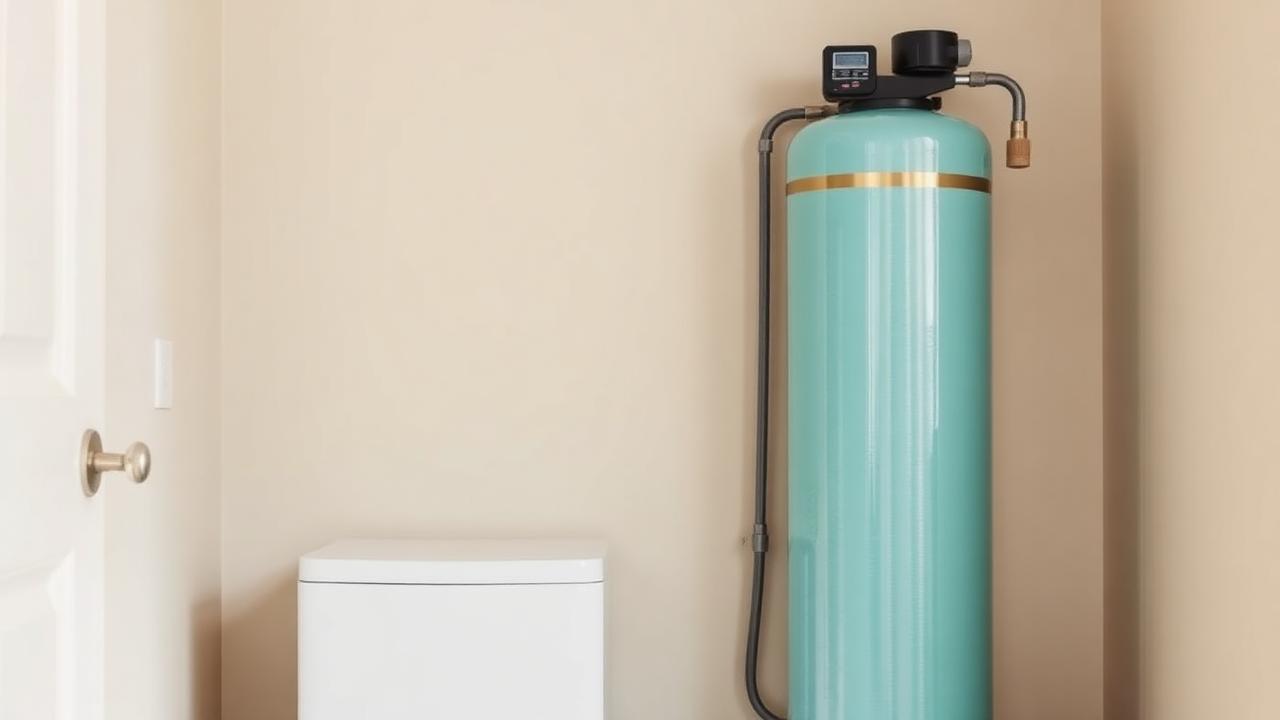
A whole-house filter sits at your home's point of entry, so every drop of water you use passes through it. Two specs determine whether it disappears into the background or becomes the slowest part of your plumbing: flow rate (gallons per minute) and tank capacity (cubic feet of media).
Calculating peak flow
Add up the gallons-per-minute rating of every fixture that might run simultaneously. A typical shower is 2.0 to 2.5 gpm, a dishwasher 1.5 gpm, a washing machine 4.0 gpm at fill, and a kitchen sink 1.5 gpm.
A 2-bathroom home with one bathroom in use, the dishwasher running, and the kitchen tap on lands around 6 to 7 gpm peak. A 3 to 4 bathroom home with simultaneous showers lands at 9 to 12 gpm peak.
Pick a filter rated at or above your calculated peak. Almost every brand we cover offers a 7, 9, and 12 gpm size class. If you are between sizes, go up: an oversized filter runs cooler, lasts longer, and never bottlenecks pressure.
Tank capacity and media life
Carbon media is measured in cubic feet. A 1.0 to 1.5 cubic foot tank suits a 2 bathroom home, 2.0 cubic feet covers a 3 bathroom home, and 4.0 cubic feet is standard for the largest residential sizes.
Manufacturers rate carbon for roughly 1,000,000 gallons or about 10 years of city-water use, whichever comes first. Higher chloramine concentrations or a heavy iron load will shorten that.
Always pair the carbon tank with an upstream sediment pre-filter (5 micron is typical). The pre-filter is the cheap consumable that protects the expensive carbon bed.
Installation and bypass
All of the brands we recommend ship with a bypass valve. Install it. A bypass lets you isolate the filter for media swaps without shutting off water to the whole house, and it makes warranty service straightforward.
Plan for a drain within 20 feet if your system backwashes. Carbon tanks that backwash periodically need a drain line and an air gap to code.
Recommended products that solve this
Here are the systems that match this guide. We do not show prices because manufacturers change them often, the buttons open the brand's current pricing in a new tab.
Top pick
SpringWell
SpringWell CF4 Whole House Filter
Whole-house carbon filter

4 cubic foot tank rated up to 20 gpm, sized for 4 to 6 bathroom homes with simultaneous fixtures.
Also consider
SpringWell
SpringWell CF1 Whole House Filter
Whole-house carbon filter
1 cubic foot tank rated 9 gpm, sized for 1 to 3 bathroom homes, the right size for most U.S. single-family homes.
Keep reading
More buying guides
-
City Water vs Well Water: Which Whole House System Do You Need?
7 min read
-
Salt-Based vs Salt-Free Softeners: The Honest Comparison
6 min read
-
Iron Filters for Well Water: Air Injection vs Manganese Greensand
7 min read
-
UV Purifiers for Well Water: When You Need One and What to Buy
6 min read
-
Water Testing: Home Kits vs Certified Labs (And When Each Makes Sense)
6 min read