Best Water Softeners of 2026
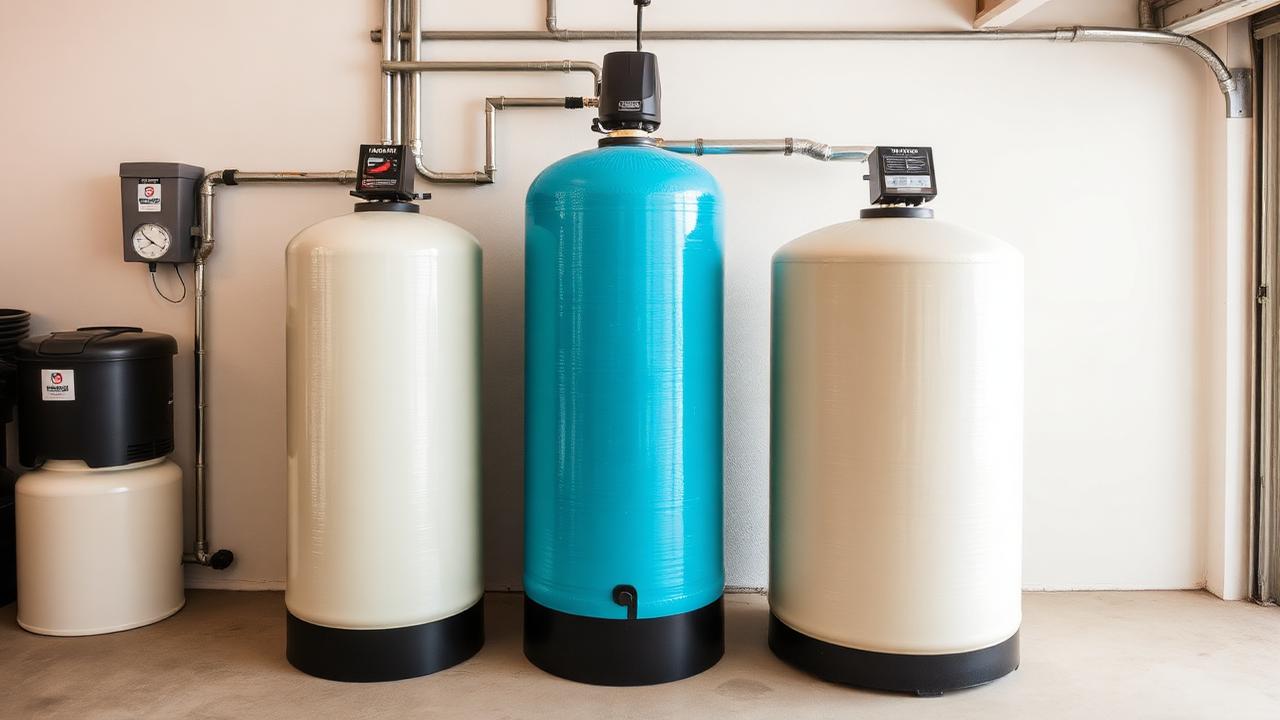
Hard water - water with high calcium and magnesium - causes scale, shortens appliance life and dulls laundry. A salt-based ion-exchange softener is the only system that truly removes hardness; salt-free conditioners reduce scale formation without removing the minerals. Here's how we'd choose between them.
Free tool · 30 seconds
Not sure which system you actually need?
Skip the spec-sheet rabbit hole. Our local-aware selector pairs your situation with the right filter, softener or RO, then layers in your city's real hardness and contaminant data. No email, no signup.
Find your system →Top picks at a glance
SpringWell SS1 Salt-Based Softener
True softening for very hard water with metered, app-controlled regeneration.
SoftPro Elite Water Softener
Strong flow, smart efficiency mode and a lower up-front price than premium peers.
SpringWell FutureSoft FS1 (Salt-Free)
TAC media for ~99% scale prevention without salt, drain or pressure drop.
Compare all softeners
| Model | Type | Flow | Warranty | Best for | |
|---|---|---|---|---|---|
| SpringWell FutureSoft FS1 (Salt-Free)
SpringWell |
Salt-free conditioner (TAC) | n/a | Lifetime | Salt-free scale control on city water | Check price |
| SpringWell SS1 Salt-Based Softener
SpringWell |
Salt-based ion-exchange softener | n/a | Lifetime | True softening for very hard water | Check price |
| Aquasana Rhino + SimplySoft Bundle
Aquasana |
Filter + salt-free conditioner | 7 | 10-year limited | All-in-one filter + scale control | Check price |
| SoftPro Elite Water Softener
SoftPro (QWT) |
Salt-based softener | n/a | Lifetime on tanks and valve | Best-value salt-based softener | Check price |
| SoftPro Smart Home+ Softener
SoftPro (QWT) |
Salt-based softener (smart) | n/a | Verify | Smart-softener alternative | Check price |
Salt-based vs salt-free - the honest answer
Salt-based softeners use ion exchange to remove calcium and magnesium and replace them with sodium. The water you get is "soft" in the technical sense. Salt-free conditioners (typically using Template-Assisted Crystallization) do not remove hardness minerals - they change the form so the minerals are less likely to stick as scale. If your gpg is very high, you'll feel the difference of a salt-based system; if you're moderate and mostly worried about scale on a tankless water heater, salt-free can be enough.
Signs you have hard water (and what it costs you)
Hard water is easy to spot once you know the symptoms. The classic signs are chalky scale on faucets and shower glass, spotty dishes, soap and shampoo that will not lather, skin and hair that feel dry after a wash, and laundry that comes out stiff and dull. The hidden cost is bigger: scale builds up inside pipes, water heaters and especially tankless units, which raises energy use and shortens the life of every appliance that touches hot water.
Hardness is measured in grains per gallon, or gpg. As a rough scale, water under 1 gpg is soft, 1 to 3.5 is slightly hard, 3.5 to 7 is moderately hard, 7 to 10.5 is hard, and anything above 10.5 is very hard. The higher your number, the more you will notice the difference a softener makes. You can find your area's typical hardness on our local water-quality pages, or confirm your exact level with an inexpensive home test kit before you buy. If your water is only moderately hard and your main worry is protecting a tankless heater, a salt-free conditioner may be enough; if it is hard or very hard, a salt-based softener is the dependable fix.
How to size and choose a softener
A softener that is too small regenerates constantly and wears out early, while one sized correctly runs efficiently for years. Sizing comes down to your hardness and your household's water use. The common method multiplies your hardness in grains per gallon by the gallons your home uses each day (a useful planning figure is about 75 to 100 gallons per person per day), which gives the grains the system must remove between regenerations. Most families land on a 32,000 to 48,000 grain unit, but very hard water or a large household pushes that higher.
Beyond capacity, a few features separate good systems from frustrating ones. Choose metered regeneration over a simple timer, because a metered valve regenerates based on actual water use and saves both salt and water. Check the rated service flow in gallons per minute so pressure holds when several fixtures run at once. For certification, NSF/ANSI 44 is the standard that covers cation-exchange softeners. On the practical side, a salt-based softener needs floor space for the resin and brine tanks, a nearby drain for the regeneration cycle, and an outlet for the valve, so plan the point-of-entry location before you order. Finally, weigh the warranty: the strongest brands cover the tank and valve for the life of the original owner.
What a softener costs to run
The purchase price is only part of the story; the running cost is what you live with. A salt-based softener uses salt, which you top up in the brine tank, and a typical home goes through roughly one 40-pound bag a month, more with very hard water or a large household. Each regeneration also uses some water to rinse the resin, though a metered valve keeps that to a minimum. The resin bed itself is long-lived, often a decade or more, and the tanks on premium systems are warranted for life.
Salt-free conditioners flip this equation: they use no salt, no electricity and send nothing to drain, so ongoing cost and maintenance are close to zero. The trade-off is that they prevent scale rather than removing hardness, so you do not get the fully softened, slick feel and they are less effective at very high gpg. If you are weighing the two, think about both the up-front difference and the years of salt and water a salt-based unit will use. For the technical difference between the two, see the salt-based versus salt-free section above.
Frequently asked
Is softened water safe to drink, and does it add much sodium?
Ion-exchange softening adds a small amount of sodium in place of the hardness minerals, and the amount depends on how hard your water was. For most people it is minor, but if you are on a sodium-restricted diet you can use a potassium-chloride salt instead, or keep an unsoftened tap or a reverse osmosis unit for drinking water. This is general information, not medical advice.
Will a softener remove iron, chlorine or smell?
A softener targets hardness. It can handle small amounts of dissolved iron, but well water with real iron, sulfur or staining needs a dedicated well system first, and chlorine taste calls for a whole-house carbon filter.
Softener or conditioner for a tankless water heater?
Both help. A salt-based softener gives the most complete scale protection for a tankless unit, while a salt-free conditioner is a lower-maintenance option that meaningfully reduces scale on moderately hard water.
Can I install a softener myself?
Many handy owners do, since it ties into the main line at the point of entry and needs a drain and an outlet. If your plumbing is tight or you are not comfortable working with the bypass, a plumber is a safe call.
Do I still need a softener if I have a salt-free conditioner?
Not usually; they solve the same scale problem in different ways. Run one or the other, not both, and choose based on your hardness level and how much maintenance you want.
How long does a water softener last?
The resin bed commonly lasts ten to fifteen years, and premium tanks and valves are warranted for the life of the original owner. Good sizing and clean salt extend that life.
Does a softener waste a lot of water?
Modern metered softeners regenerate only when needed and use a modest amount of water per cycle, far less than older timer units that regenerate on a fixed schedule whether you need it or not.
Will softened water help my skin, hair and cleaning?
Many people notice softer-feeling skin and hair, easier lathering, and that they need less soap and detergent, because there are no hardness minerals fighting the soap. Results vary by person, and this is general information, not medical advice.
What is a grain of hardness?
A grain per gallon, or gpg, is the standard U.S. measure of water hardness. One gpg equals about 17.1 milligrams per liter of dissolved calcium and magnesium, so a reading of 10 gpg is firmly in hard-water territory.
Softener picks by city
The right pick depends on your local water profile. Jump to the city page for hardness, flagged contaminants and the matched system:
- Best water softener for Houston, TX
- Best water softener for Dallas, TX
- Best water softener for Austin, TX
- Best water softener for Phoenix, AZ
- Best water softener for Los Angeles, CA
- Best water softener for San Diego, CA
- Best water softener for Miami, FL
- Best water softener for Tampa, FL
- Best water softener for Chicago, IL
- Best water softener for New York, NY
- Best water softener for Philadelphia, PA
- Best water softener for Las Vegas, NV
- Best water softener for Salt Lake City, UT
Pair a softener with a whole-house carbon filter if your water also has a chlorine taste, or step up to a reverse osmosis system at the kitchen for PFAS, lead and fluoride.